
Western States: Does it really matter?
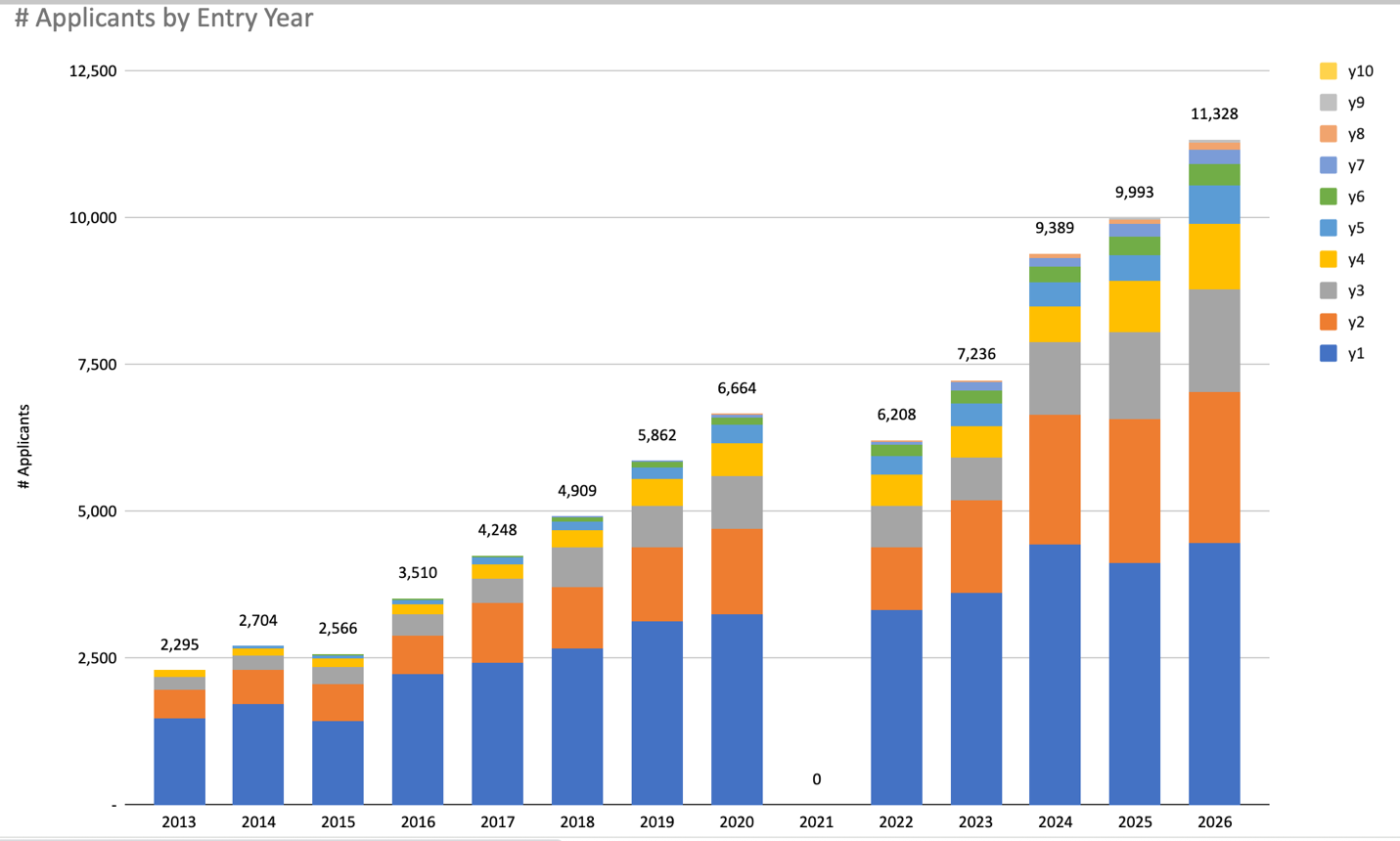
In 2025, more than 11,300 runners applied for 257 spots. Is the juice worth the squeeze?

I’ve been chasing the same dream for seven years, and it’s this: to run Western States. And the thing is, I’ve nearly given up on it. Because, in the end, does it really matter?
I’m not sure, but it sure matters to a lot of runners. For the 2026 running of the Western States 100, more than 11,300 runners, including me, put their name in the hat for just 257 available spots (a total of 369 runners toed the line). The number of applicants has doubled since I started my ultra journey in 2019. Of the 93,003 tickets submitted in the 2025 lottery, I accounted for 16 of them, or 0.017% of the total (my odds were 4.8%).
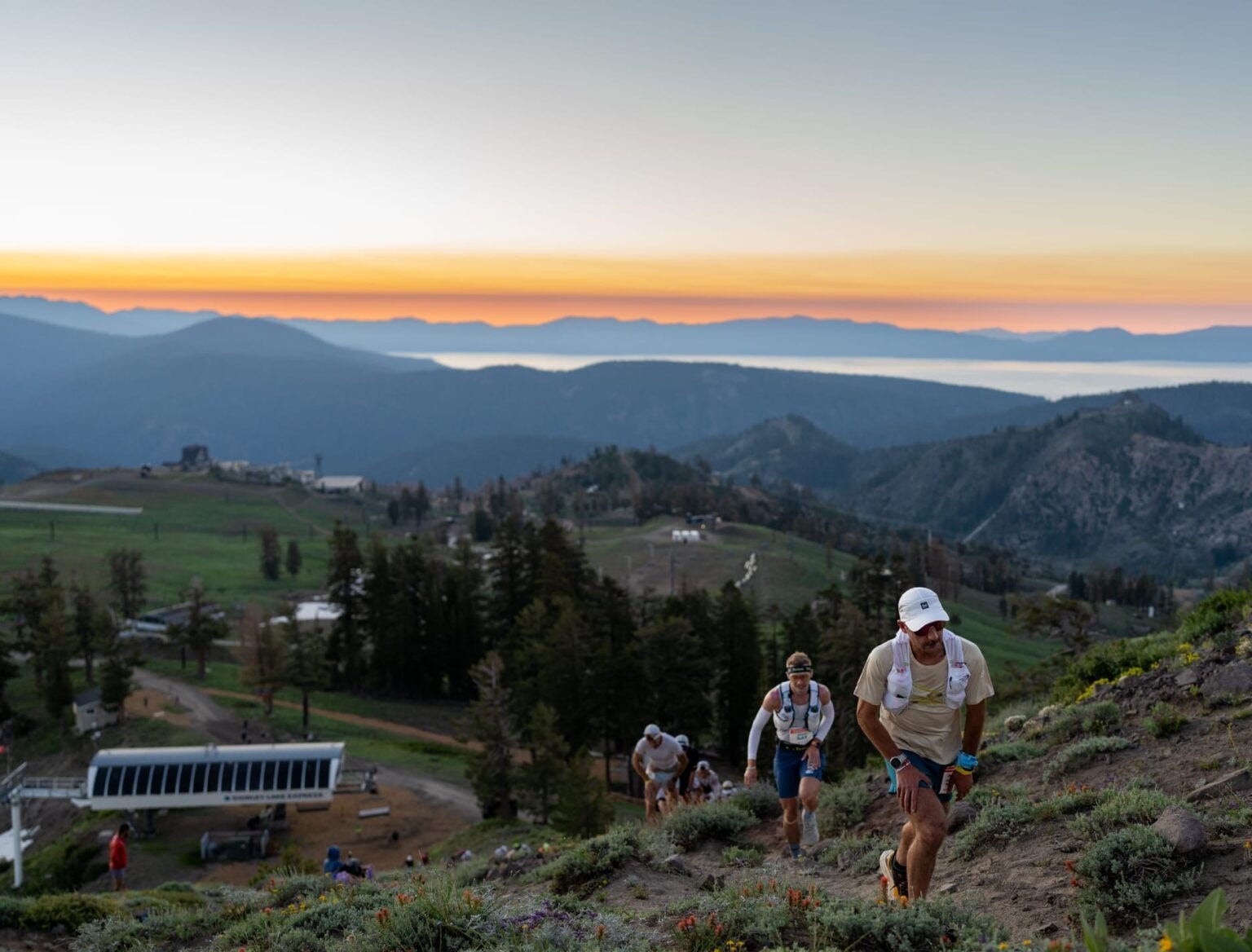
To the uninitiated, Western States, or “States” or “Western,” is the original 100-mile foot race that starts in Olympic Valley (Tahoe) and finishes, 30 hours and 100.2 miles later, on the Placer High School track in Auburn, CA. It is the most competitive 100-miler in the United States. I’d say that Western States is the Boston Marathon of ultrarunning, but that’d WAY, way undersell how special it is to gain entry.
To get into Western States through the lottery, runners must officially finish one of the associated qualifying 100k or 100-mile races within a calendar year (for the 2027 race, there are 262 qualifiers around the world). With a finish, runners get 1 lottery ticket. The odds that a runner will be selected with just 1 ticket is barely a fraction of a percent (in the 2025 lottery, it was 0.3%). So, nearly all runners will need to requalify the following year with a subsequent qualifying race.
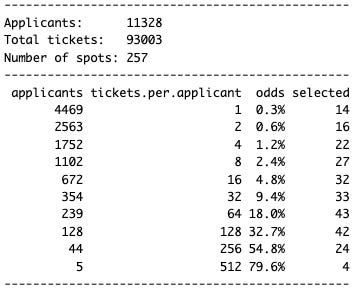
The good news is that Western States rewards longevity, and a runner’s tickets grow exponentially. Western States:
“Every lottery applicant will receive 2^(n-1) tickets in the hat where n is the number of years entering the lottery without gaining entry. That is, 1st year applicants = 1 ticket, 2nd year = 2 tickets, 3rd year = 4 tickets, 4th year = 8 tickets, and so on.”
To add, Western States used to require that runners finish consecutive qualifiers, or they’d lose their tickets. In 2021, however, they softened their position, giving runners some reprieve: “Runners will no longer need to have consecutive qualifiers to keep their ticket count in the lottery. … The next time they qualify and apply, regardless of when that is, their ticket count will double per the WSER 2^(n-1) formula.”
That was a great development, especially for female runners who may be pregnant or post-partum and wouldn’t be able to run a qualifier –- or for any runner who couldn’t run a consecutive qualifier due to injury, life circumstances, or because they simply wanted/needed a break.
Of course, perhaps one consequence is that it leaves more runners with more tickets in the lottery, reducing the odds of gaining entry via lottery.
But still, in a pay-to-play world, the Western States lottery feels entirely just and democratic. And, despite the professionalization and commercialization of the sport, it still feels old-school. During the race’s live feed, I loved listening to the stories of the first-time runners who have been working to earn their start for 9, 10, 12 years. Just imagine the tens of thousands of miles they logged and sacrifices made to fulfill one dream. (Conversely, I hear stories of Leadville 100 runners who are running Leadville, the 2nd oldest 100-miler, as their first long ultra. There are many paths to entry, including holding a Lifetime gym membership, earning a coin at a 50k qualifier, paying for a Leadville training camp, etc.)
See You At States?
And yet, just because everyone wants in, and it’s the tentpole event for ultrarunning in the United States, does that mean I should feel obligated to run it -- or at least keep trying until the lottery gods are magically in my favor?
That’s a question I kept asking myself in April, during the Leona Divide 100k. I went into the race slightly injured and definitely undertrained. But I wanted to bank an early Western States qualifier so that I would be free to train and race however I liked for the balance of the season. And, I assumed I could wing it, as I did six months prior at Cuyamaca 100k (read race report here).
Cue my sad effort. As I wrote in my recap, I made two rookie mistakes: I ignored my fueling needs, and I forced the use of poles. As a result, I botched my race and ended up dropping to get a 50-mile finish. Here’s how I put it:
“Friends of mine said that I should be proud of this effort, that I should pat myself on the back for not quitting. I don’t see it that way. While, yes, I finished the 50-miler, I did so only after being convinced to drag myself out of the aid station. And I only had to do this because, like a rookie, I fumbled my nutrition so badly. Ignoring my real-food needs led to a cascade of failures: poor nutrition begat bad performance begat negative outlook begat quitter’s mindset. I had all the tools in front me; I just failed to use them (I was too confident/careless).”

Late into the afternoon, I began asking myself, “Why are you even doing this? Just to qualify again for Western States? So, you’ll have 32 tickets? Why do you want to run Western States, anyway? Because you’re supposed to? Says who?”
Truth be told, I questioned myself as a way to justify my decision to drop from the 100k distance and finish with a 50 at Leona Divide. In that moment, it was easy to rationalize. Over the long run, that choice was shortsighted.
I mean, do you just give up on a dream because you had a bad day? What good would that do? Where’s the lesson in that?
Perhaps that’s one I’m still trying to find. Maybe that is the lesson. That you can’t panic when the going gets tough and throw in the towel; that you have to remain steadfast on the goal, with an eye on the bigger picture.
I mean, do you just give up on a dream because you had a bad day?
Understandably, it’s easy to lose perspective when your day has unwound and you’re knee deep, wallowing in self-pity.
It reminds of YouTuber Casey Neistat’s inspiring, decades-long quest to run a sub-three-hour marathon, which he captured in a short documentary called Sisyphus and the Impossible Dream.
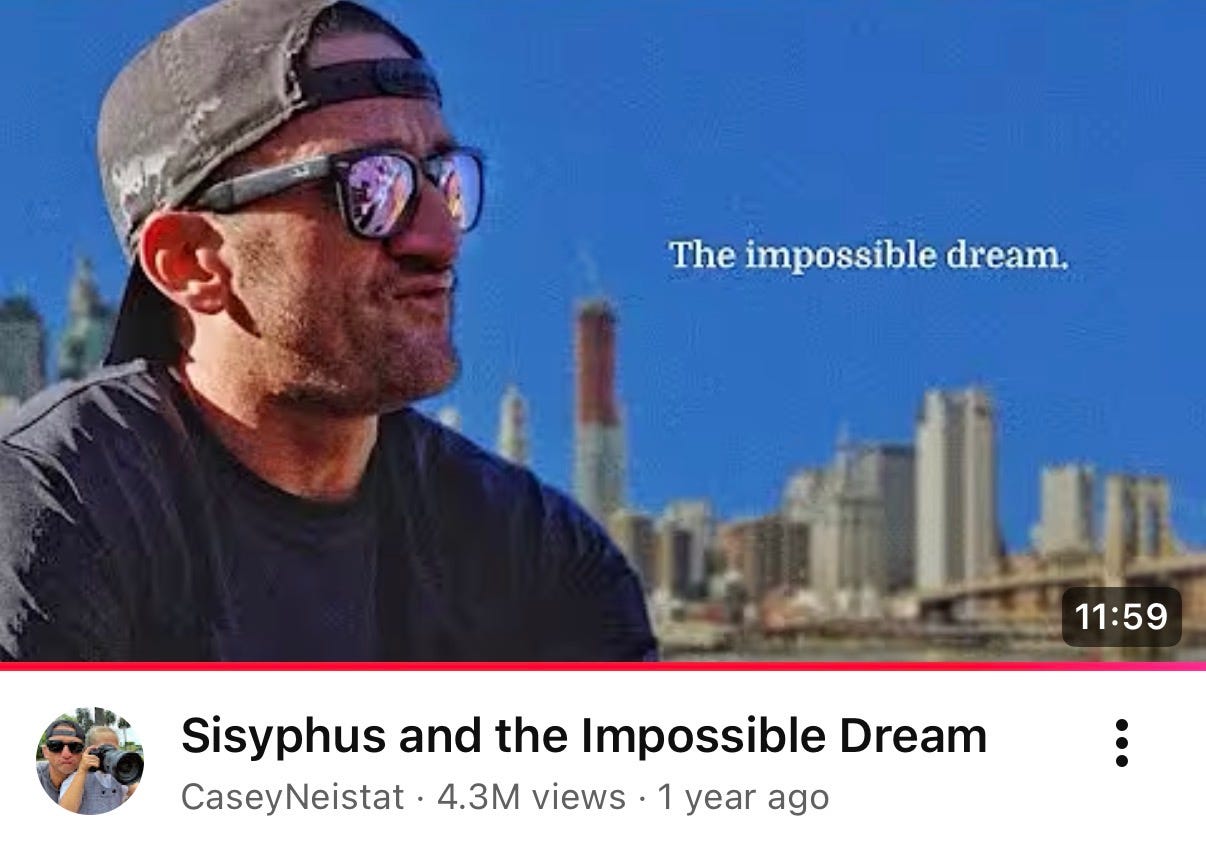
As he sets off on his 25th attempt to go Sub3 in the Tuscon Marathon, after failing in New York some five weeks prior, the voiceover:
Life’s a battle, and there are times when you need to accept that you’ve been beat. It’s been a long road, and there’s a lot to be proud of. But I’m never going to break 3. I’m just not that guy.
[record scratch] Ahem
Oh, F*CK THAT!
You don’t just give up. You can’t just walk away. You get out there, and you find that f*cking dog. Yes, it’s hard; if it was easy, everyone would be doing it.
You’re not out here because it’s easy. You do a lot of meaningless, purposeless, stupid things; you get obsessed, you spent years focused on them. And literally no one cares but you. But you persevere anyway. You keep running.
You keep running. You don’t quit. You die trying. Because when you add up all those stupid, meaningless obsessions and accomplishments, what they equal, what they add up to, is your life.
Western States, back on the menu. The dream is alive. Just need to run another qualifier.
Loved reading this.
So good! And loved that video! So funny that we wrote about similar experiences today. Keep going!